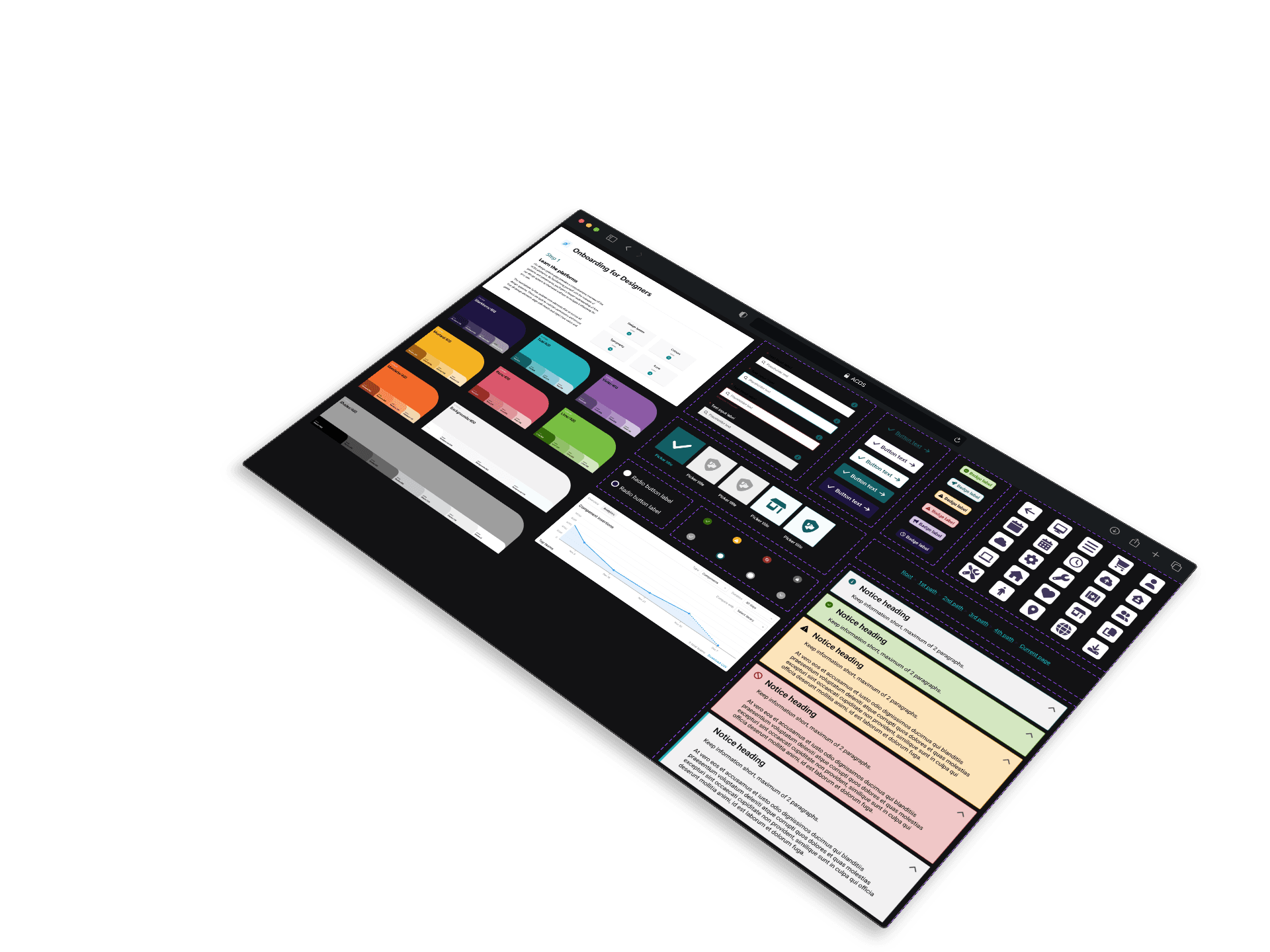
Project Story
What better way to narrate how I evolved this DS then to compare it to some of our favourite series’. It’s the closest reference point for how I experienced the Aged Care Design System. It unfolded in seasons. New characters arrived, others dropped off, tensions built behind the scenes, priorities shifted, and every so often there was a small win that felt like a season finale.
My work on the ACDS spanned two years. I joined when it was still finding its feet beyond proof of concept and stayed as it grew into something the department needed to trust, use, and scale. The ACDS sits within the HCD section of the DSAI branch within DHDA, and over time my role grew with it, from icon grunt work and production support to Figma administration, governance strategies, system optimisations and supporting adjacent design systems across the department.
Season 1
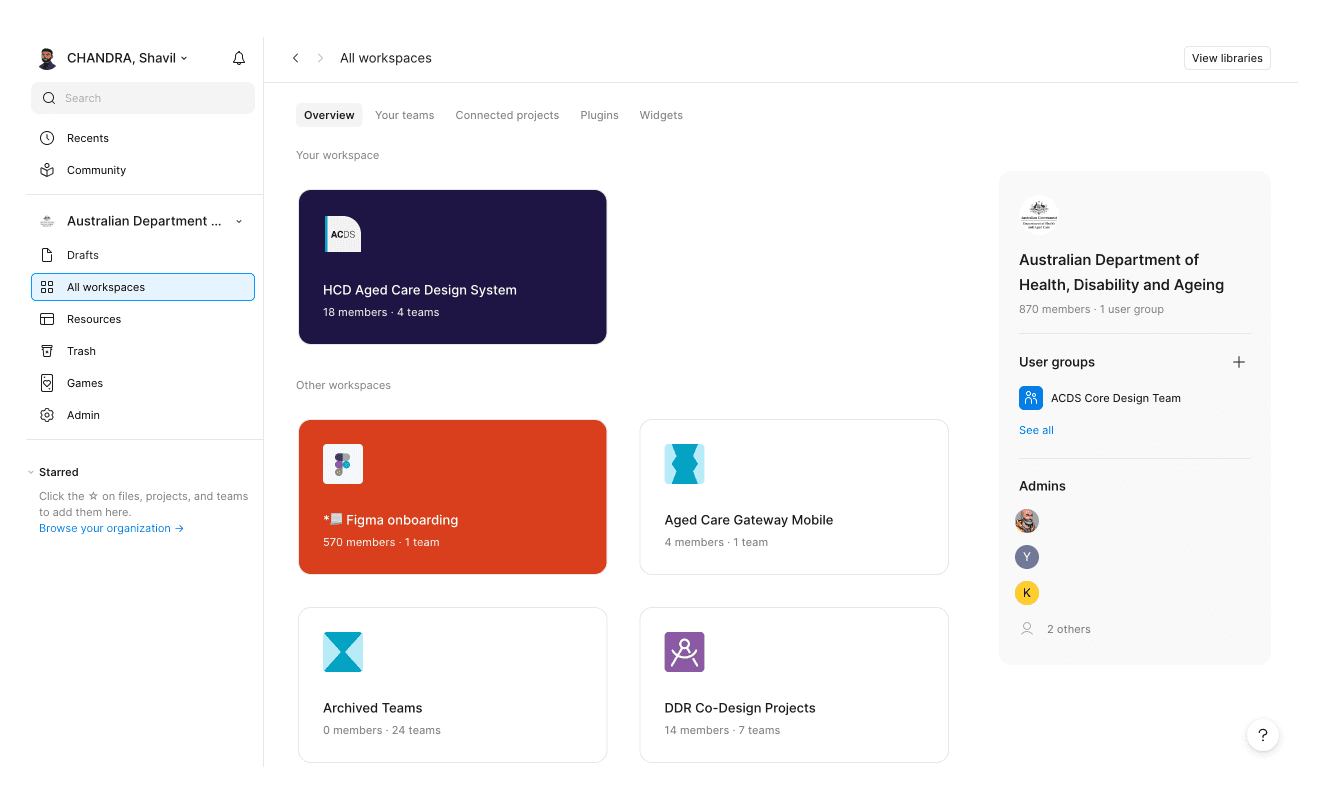
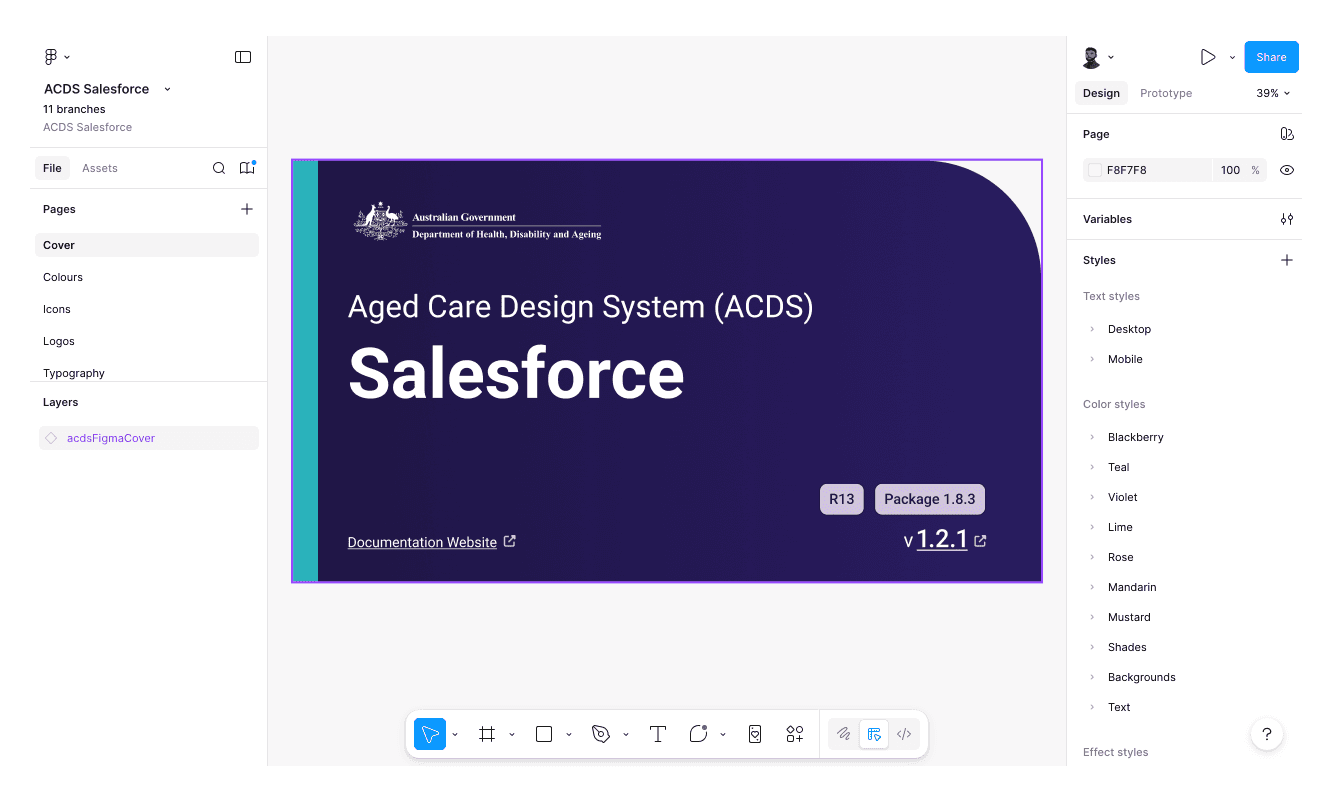
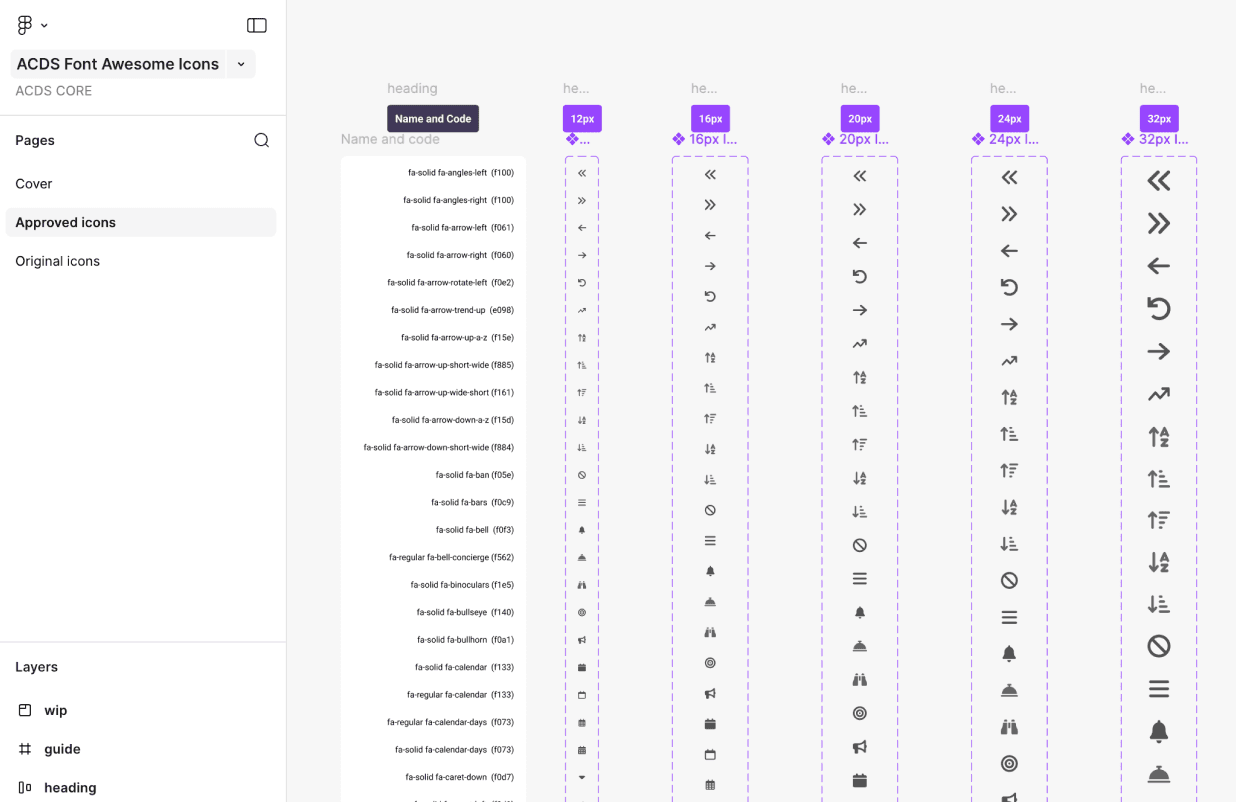
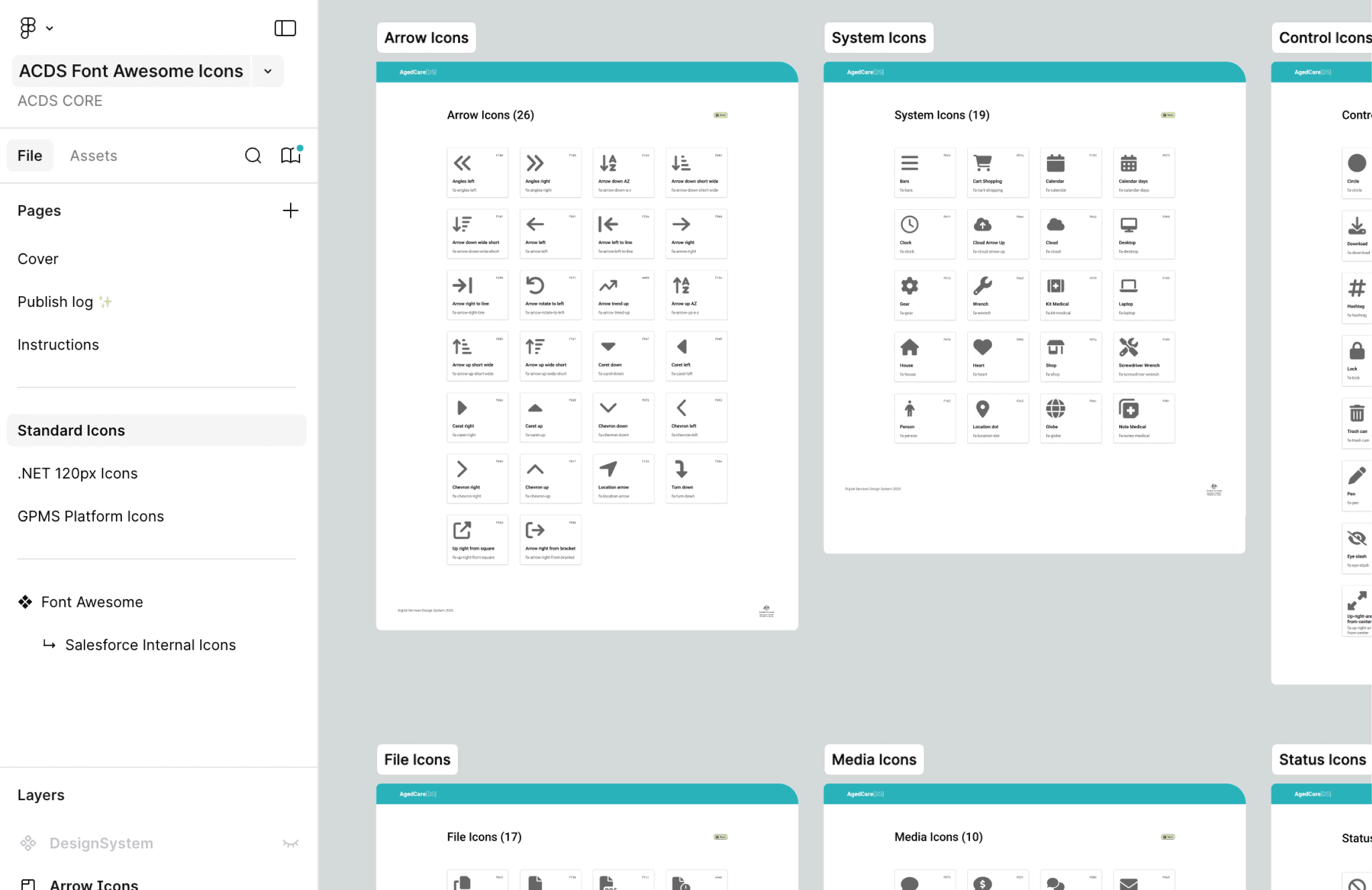
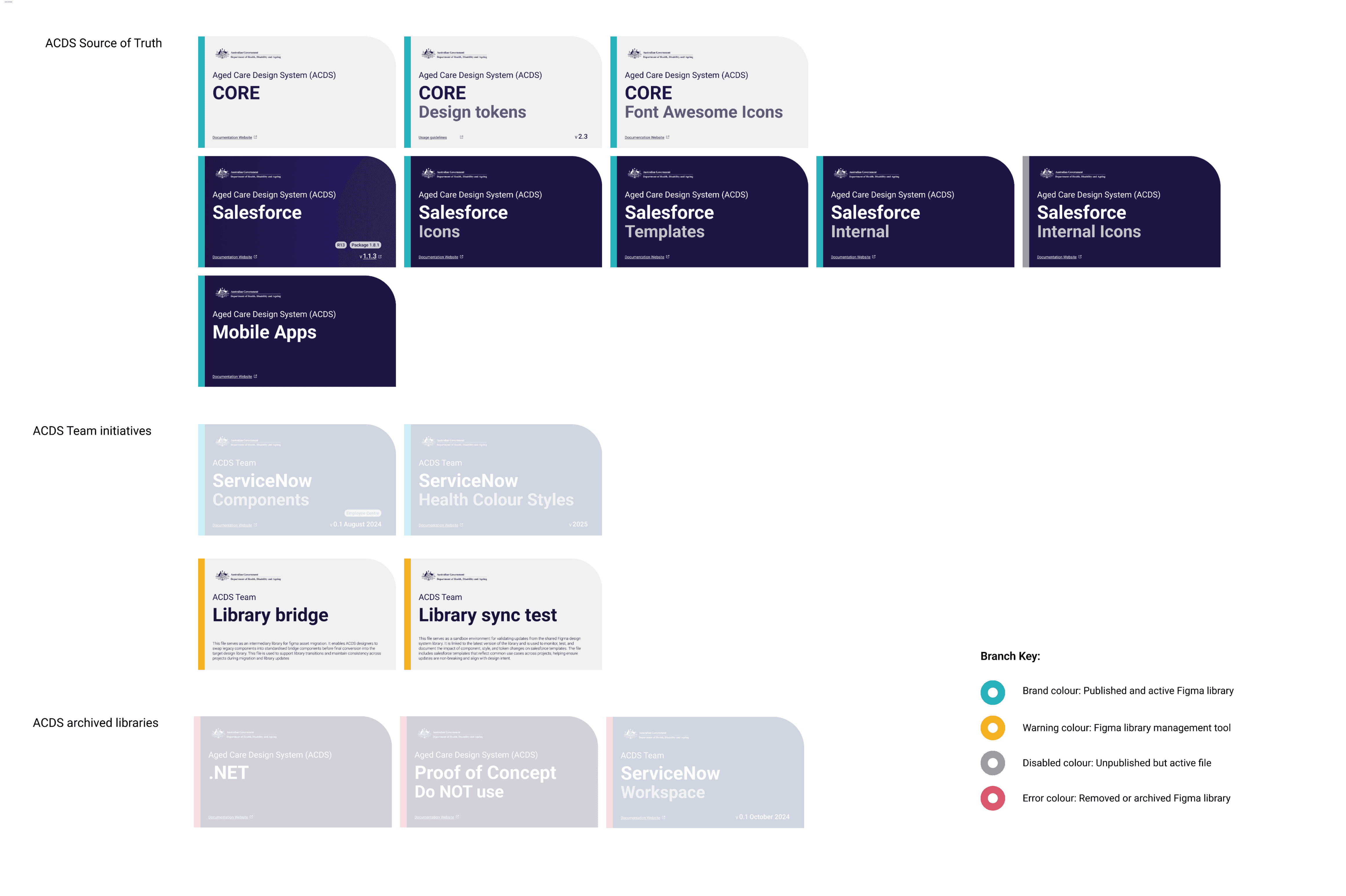
When I first joined the Aged Care Design System, I came in through two practical areas of work. One was supporting the .NET side of the system, which meant helping maintain one of the design system’s platform outputs. The other was owning the icon library, where I was responsible for creating, formatting, publishing, maintaining, and responding to requests from a growing internal user base.
It was not the glamorous side of design systems. It was the backstage work that kept things usable and moving. Through that work, I started to understand how the system was structured, who relied on it, and what it took to keep shared assets consistent across teams.
By the end of this chapter, a bigger issue had started to show itself. The challenge was no longer just making and maintaining assets. It was that many teams still did not have a clear way to discover, understand, and confidently use the system. That became the cliffhanger leading into the next season.
/
Arc
Rookie
Character development
Season finale
Season 2
By this point, the problem had grown beyond maintaining files and assets. The ACDS had useful foundations, but it still lacked a clear identity, stronger narrative, and a central place where teams could understand what it was, how it worked, and why it mattered.
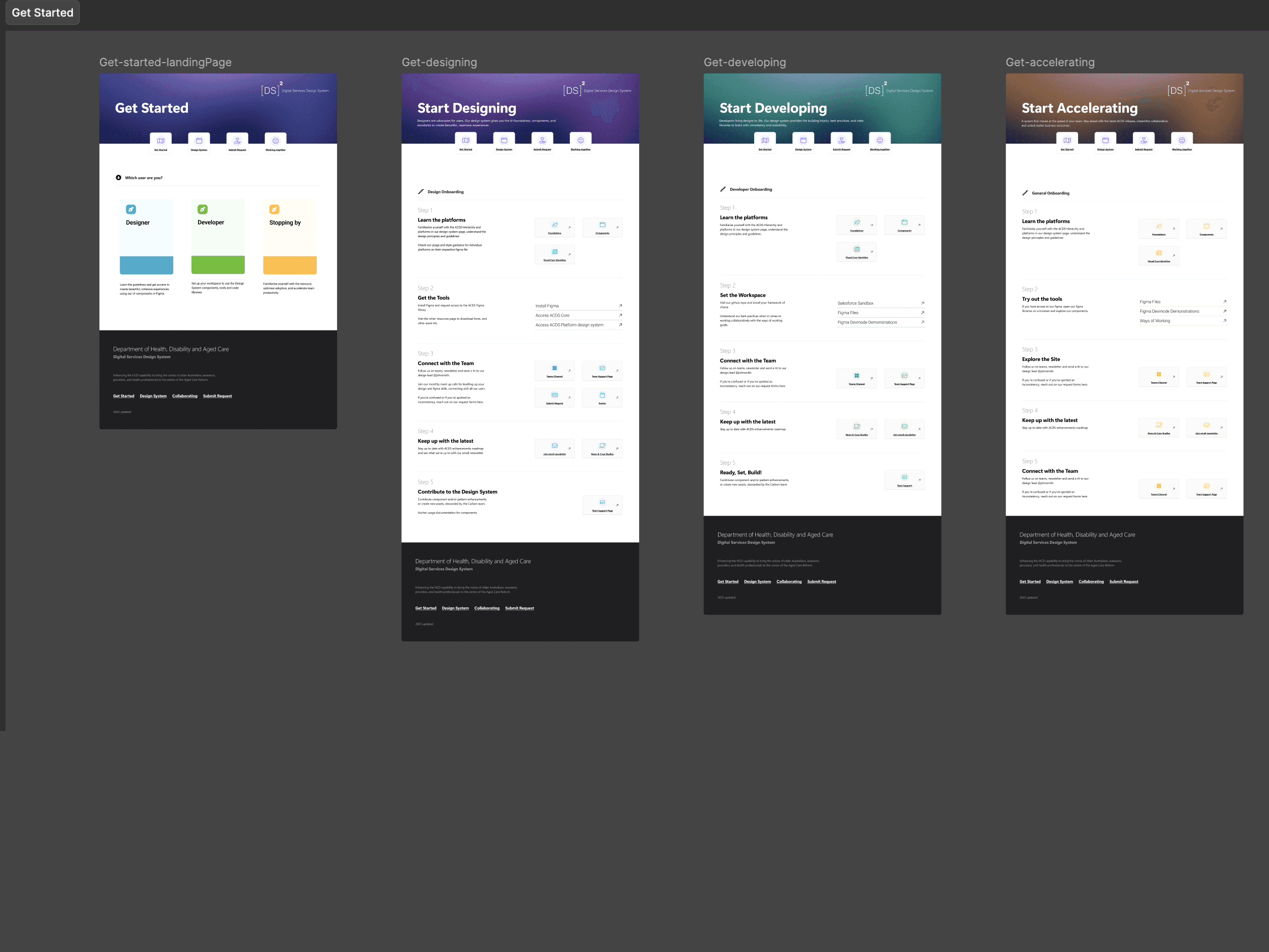
I teamed up with another designer (Alice!!) to tackle that problem together as adoption and communicating this amazing system felt neccessary. Using Figma, we explored layouts, interactions, and information architecture for a SharePoint site designed to behave more like a design system website, studying systems like IBM, Atlassian, SLDS, and GEL to understand how mature systems build trust, structure content, and support adoption.
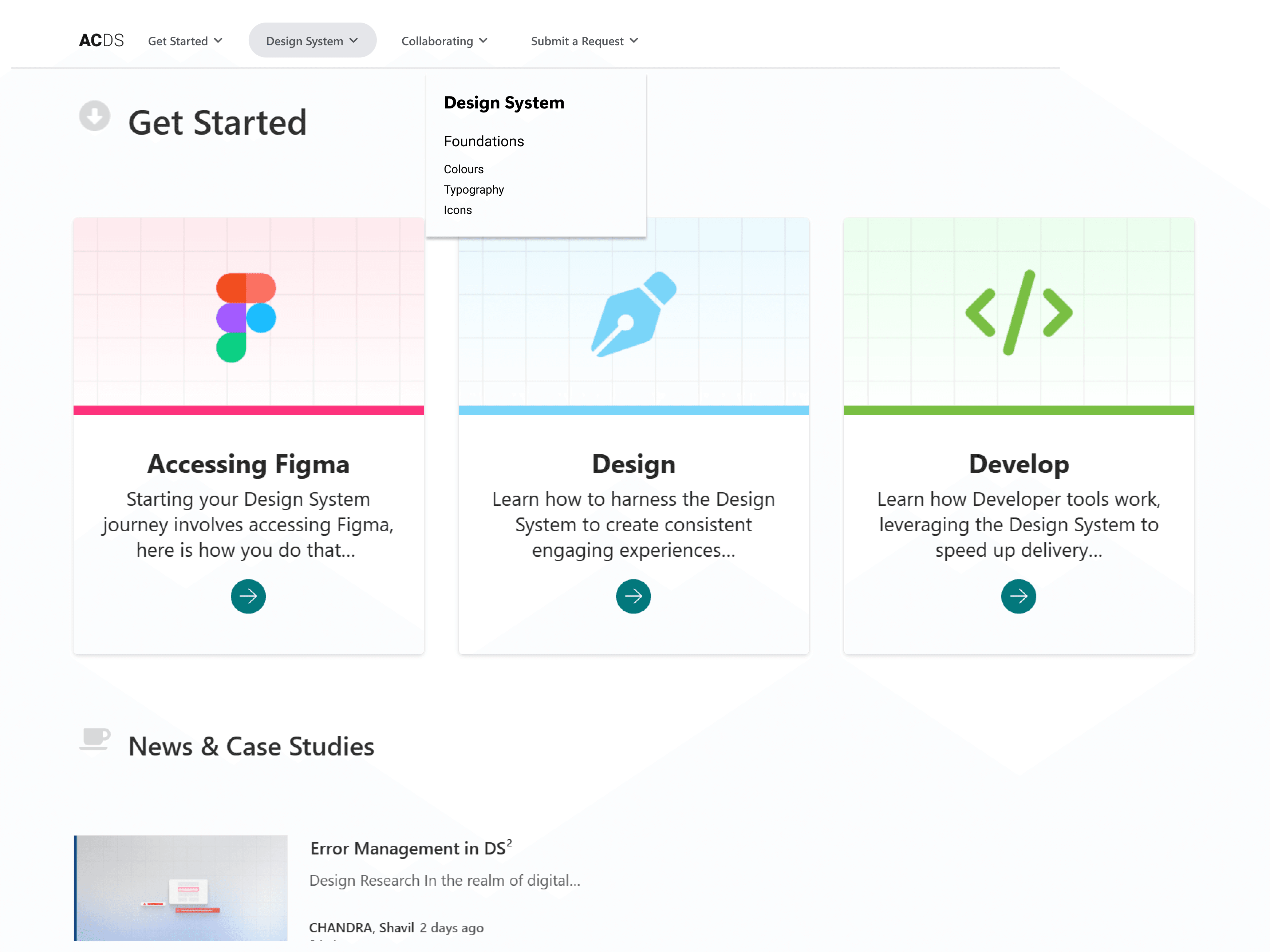
The outcome was more than a documentation layer. It became a clearer front door into the ACDS, bringing together foundational assets, onboarding guidance, collaboration practices, request pathways, and shortcuts into Figma so teams could discover, understand, and use the system more confidently.
/
Arc
Identity and adoption
Character development
Season finale
Season 3
With the SharePoint now live, my role widened and I took on more responsibility for administering and growing the site, while also moving deeper into the Figma environment itself through design ops and foundational system work.
I saved the department $84,900 USD quarterly in Figma licensing costs by helping rationalise seat usage across the department, distinguishing where full design access was truly needed versus where view or comment access made more sense, and reducing unnecessary spend without disrupting active teams. I built a spreadsheet model to identify gaps in usages to forecast the volume we required.
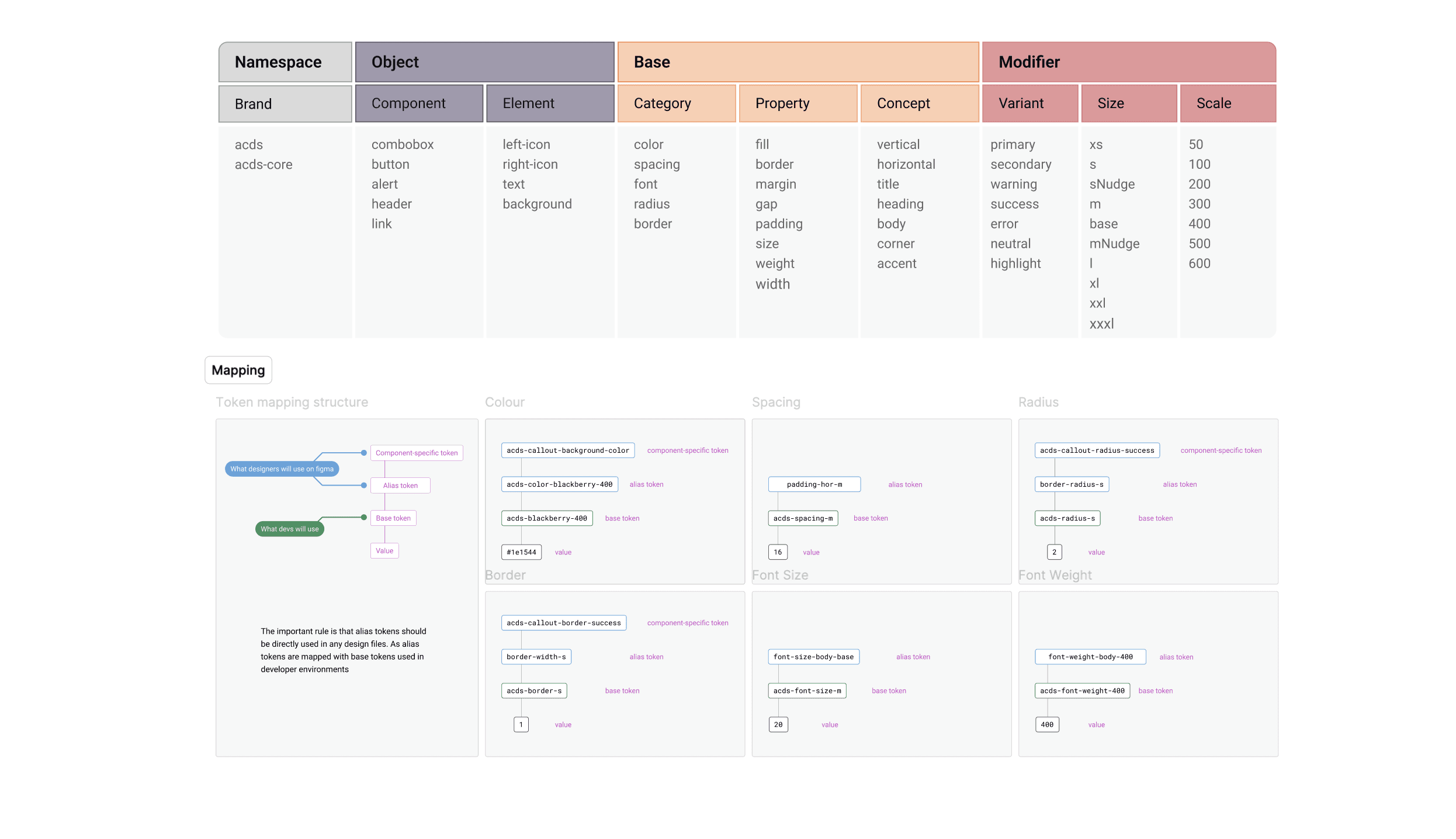
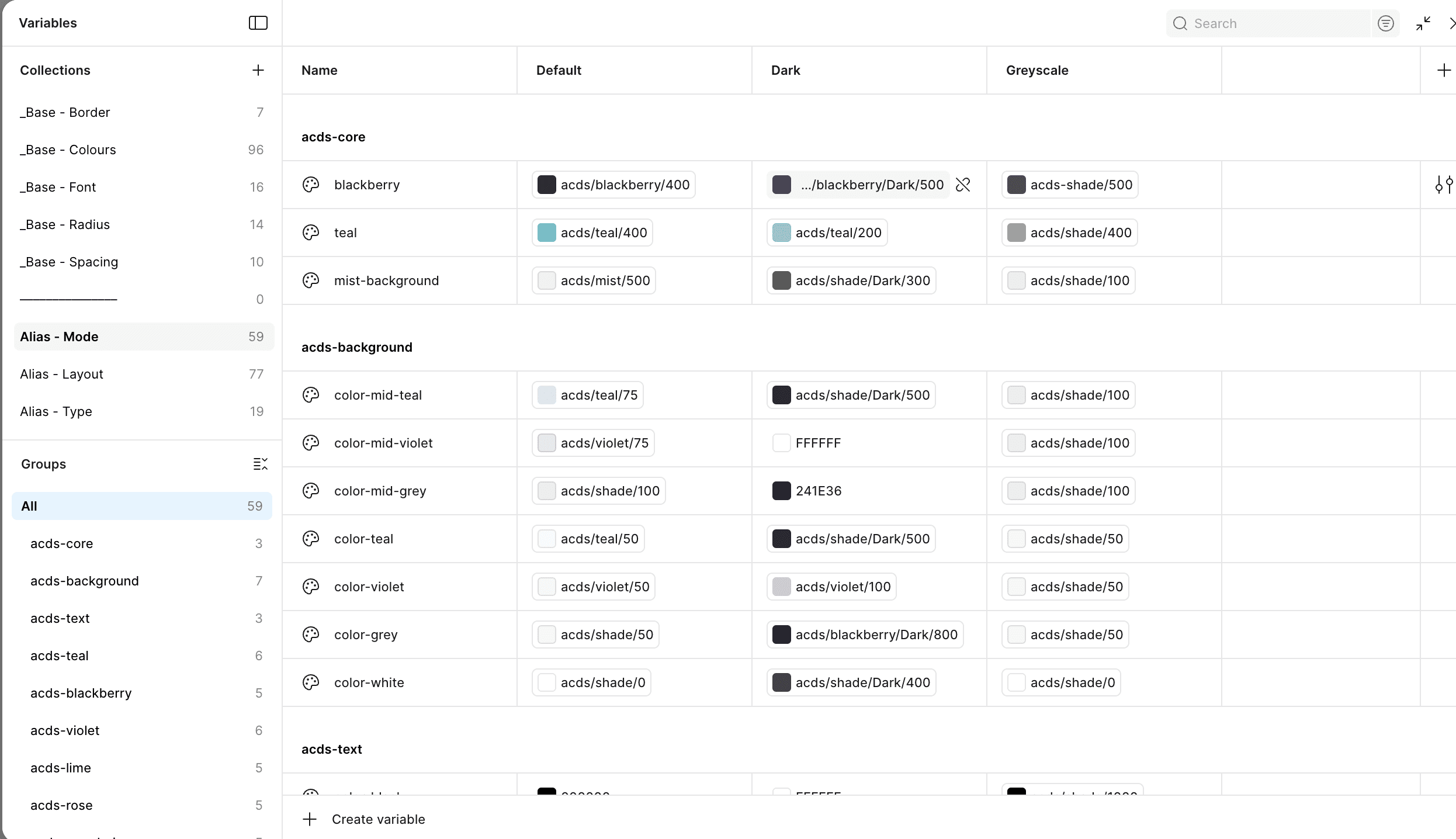
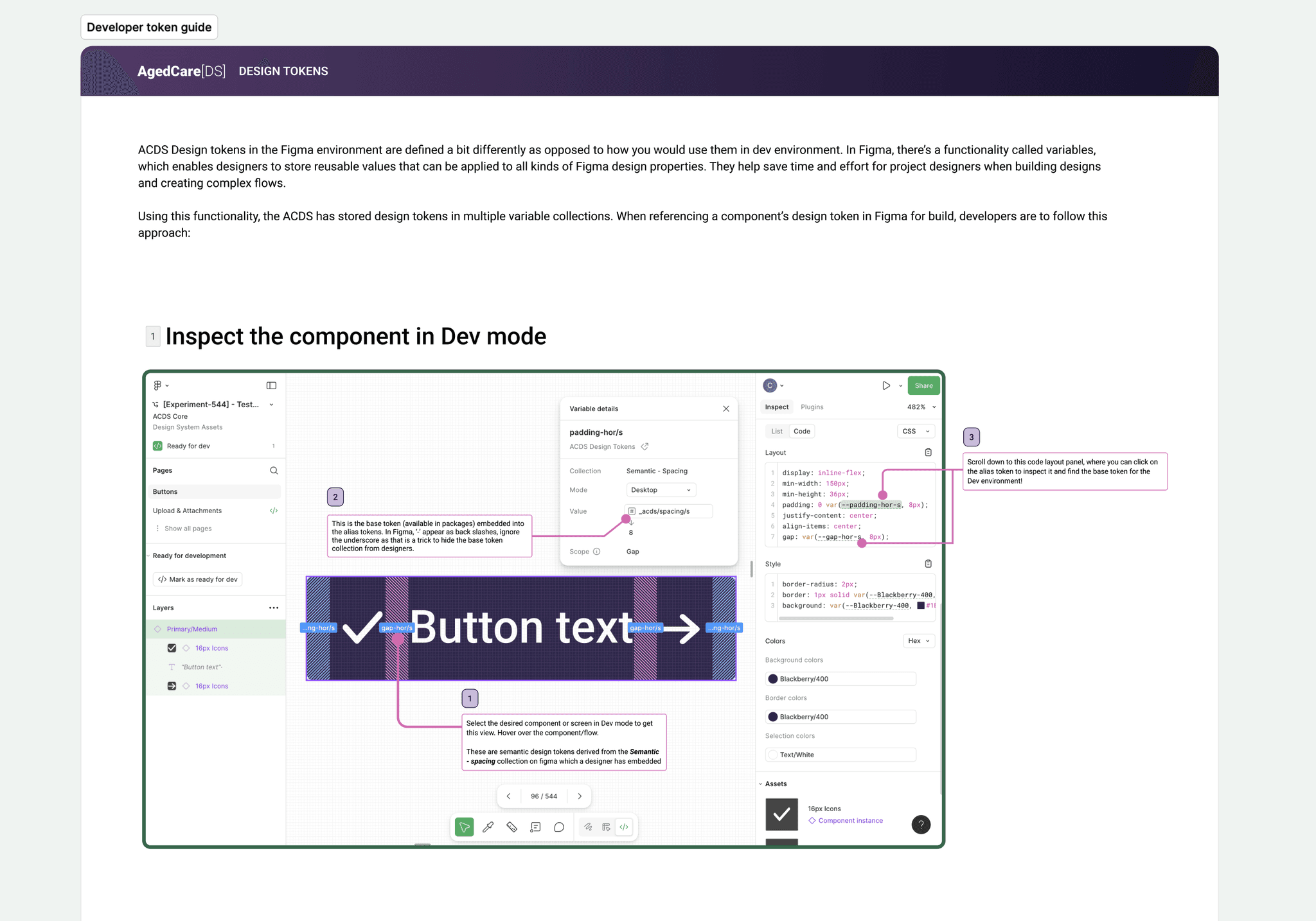
The main arc of the season, though, was design tokens. I wanted the system to evolve, so I drove the expansion of our token structure in Figma, moving it from a limited setup into a more comprehensive hierarchy covering colour, spacing, borders, and typography. That work made the ACDS stronger at its core, improved consistency across teams and platforms, and laid the groundwork for better handoff between design and development.
/
Arc
Scale up and out
Character development
Season finale
Season 4
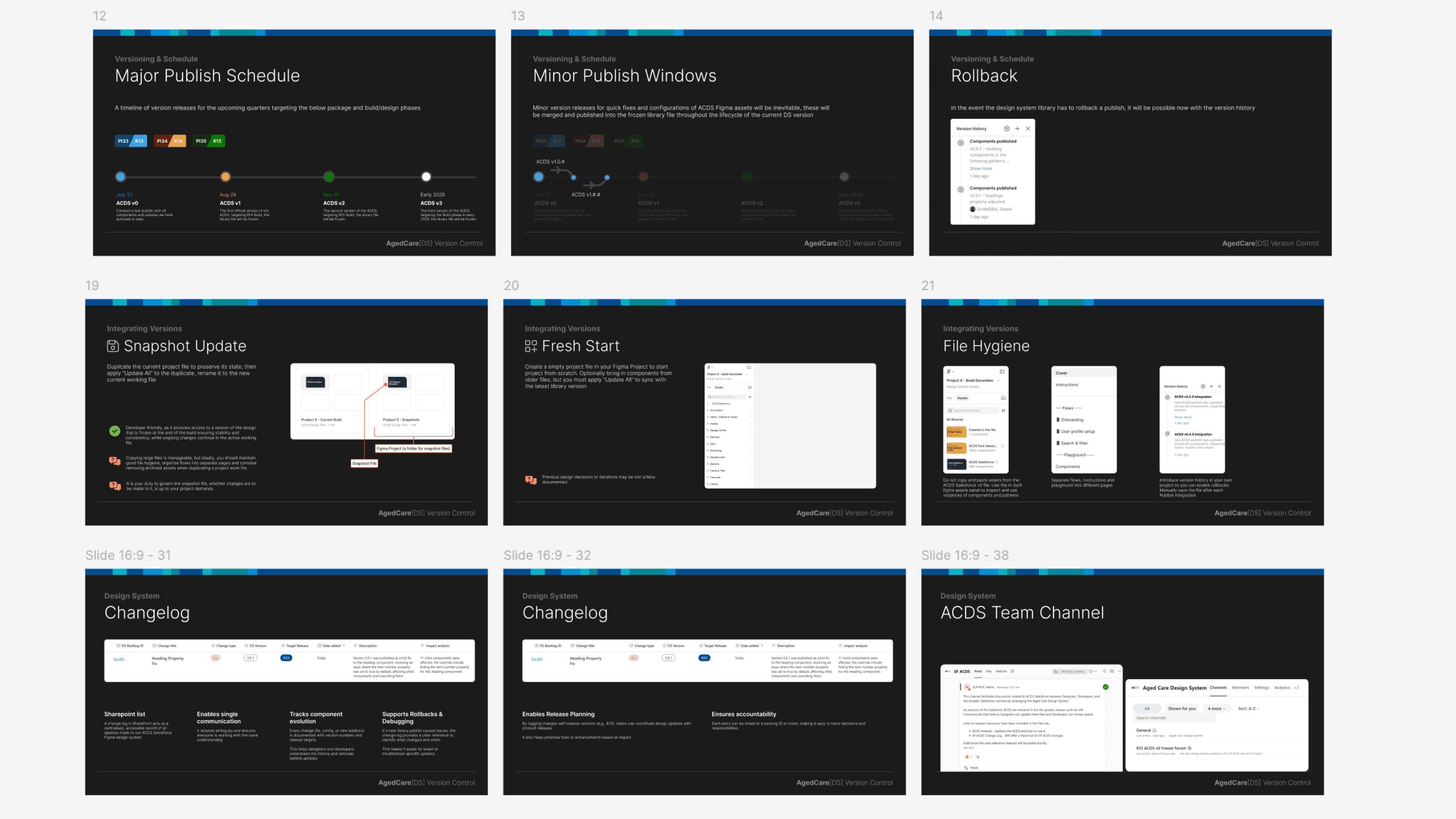
Once the token foundations were in place, the next challenge was not just making the ACDS stronger, but making its evolution easier to follow.
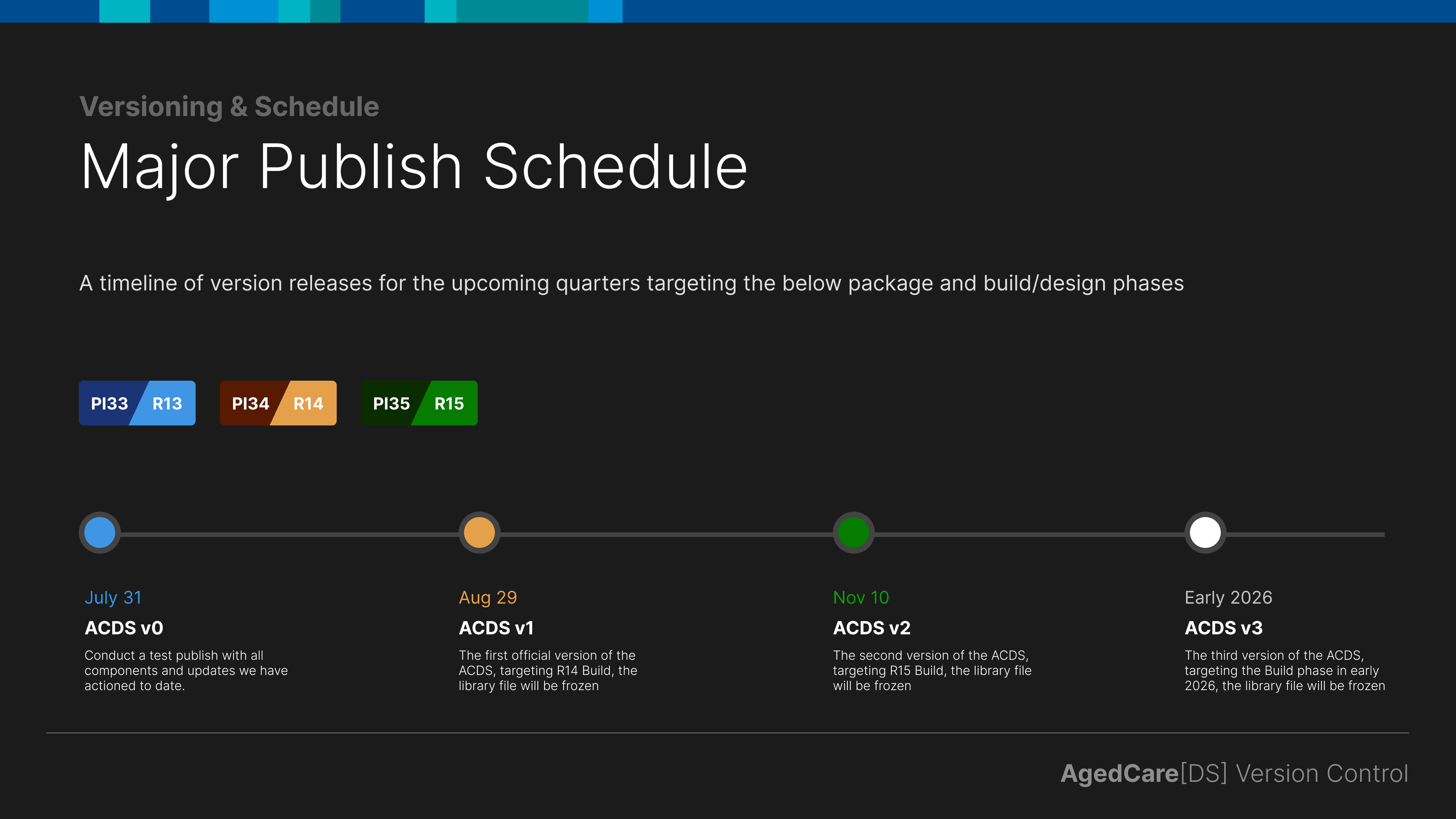
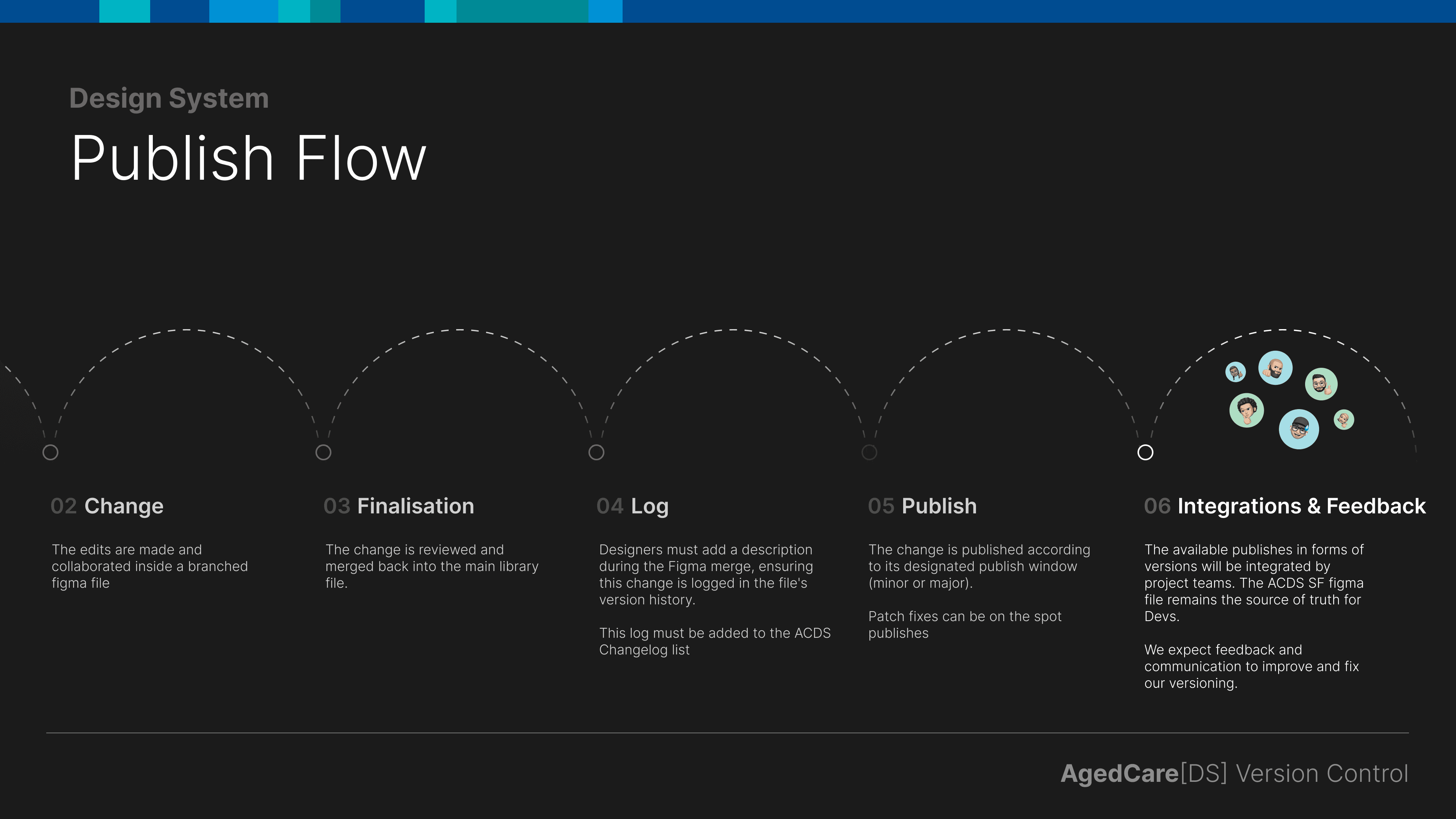
I led versioning across the ACDS files introducing clearer release conventions, freezes, change logs, and semantic versioning so updates had structure, rationale, and traceability. This became increasingly important as the Salesforce stream grew in prominence and more teams relied on the library to design and build with confidence.
This season also brought new cast members to the front including our consumers. At this point, the work was less about producing isolated assets and more about helping the system evolve in a way other teams could actually follow, absorb, and trust.
/
Arc
Release management
Character development
Season finale
Season 5
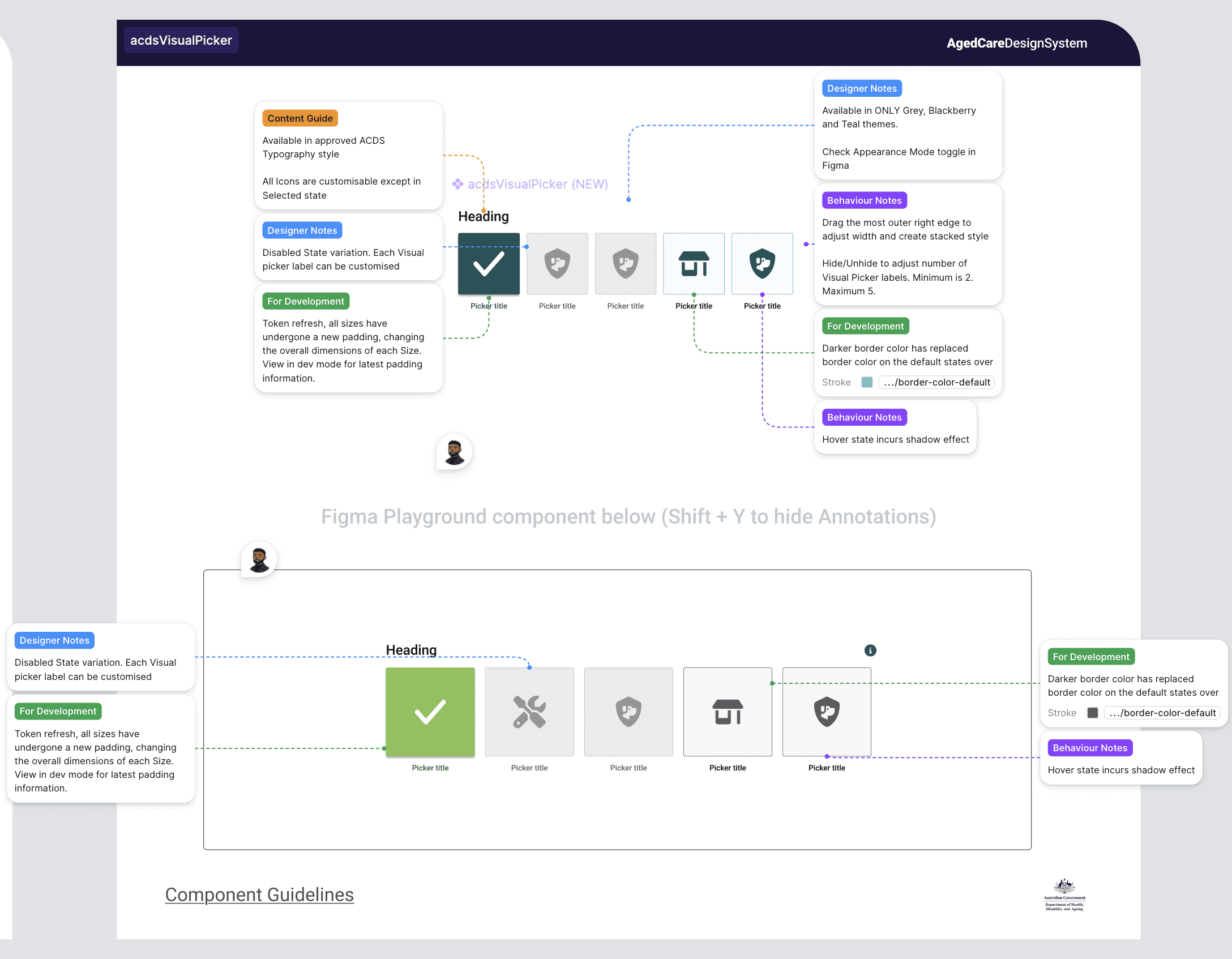
By now, the ACDS looked mature on the surface. Versioning was in place, token work had wrapped, and the Salesforce stream had become the centre of gravity. But stronger foundations in Figma did not automatically mean the whole machine was aligned. The pressure points building across earlier seasons finally came to a stop here... we had to properly understand where design and code packages (developed by our friends at SPET) were drifting, and get the right people into the same room to deal with it.
We conducted a major audit of the design system to uncover those gaps. I built a spreadsheet-based component health tracker that made drift visible, discussable, and harder to ignore. This was the season where the system had to answer for itself.
I introduced more practical ways of tightening how the system operated across teams: workshops on Figma capabilities, using checklist widgets before handoff, branching workflows, and weekly forums between the design system crew, QA, and our consumer teams. The work was no longer just about building the system well. It was about making sure it stayed aligned, understood, and accountable as it scaled.
/
Arc
Governance
Character development
Season finale
Season 6
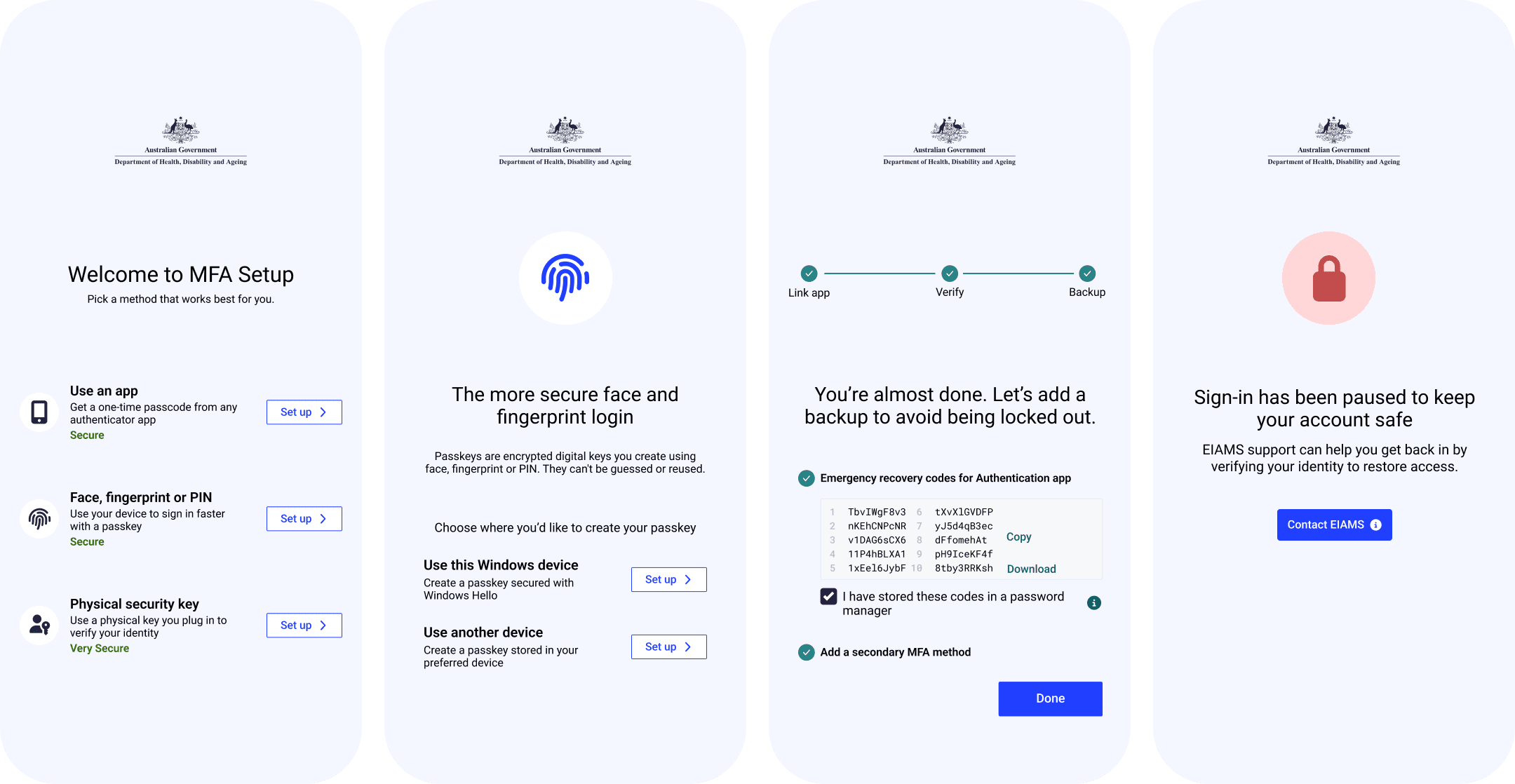
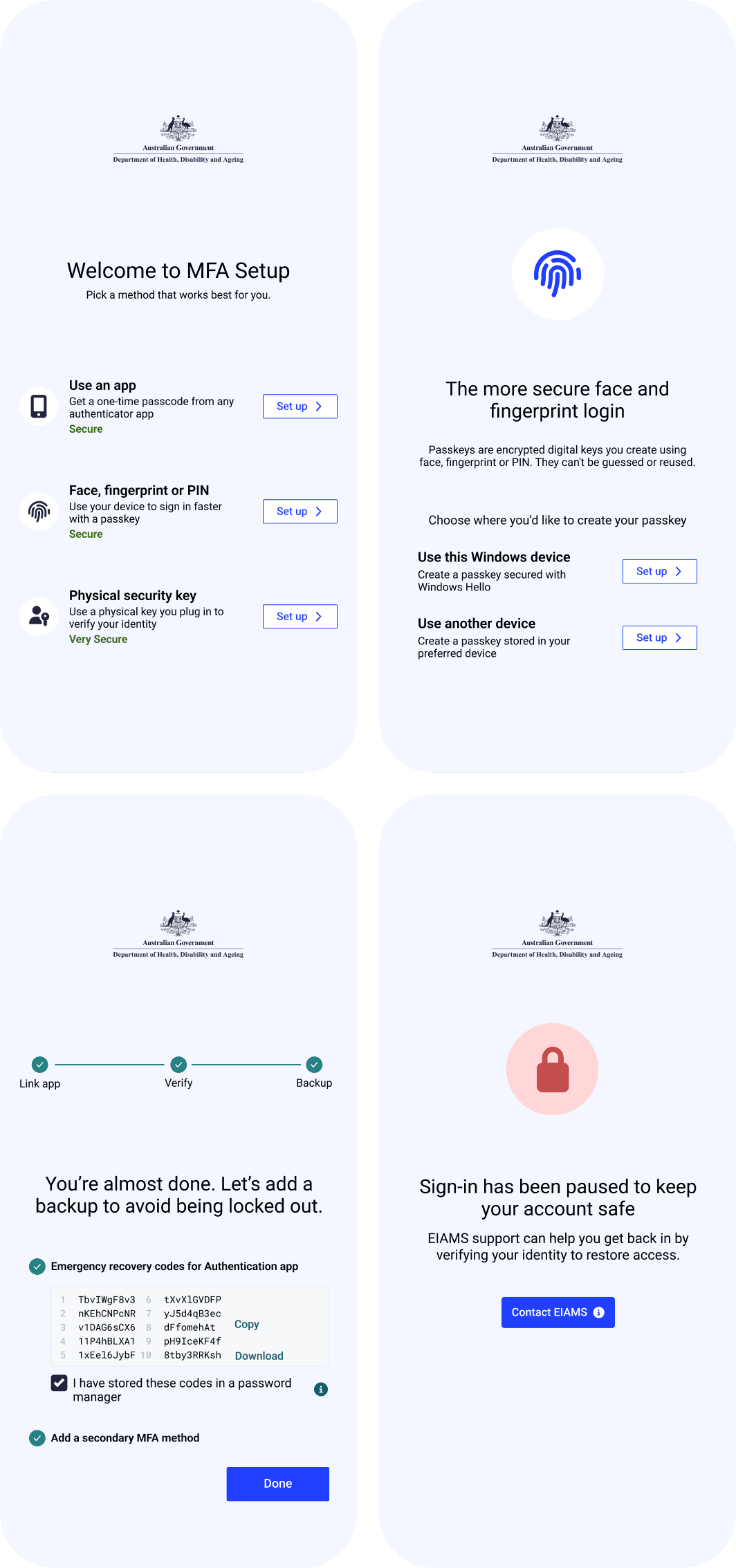
After helping the ACDS reach a more mature state, I stepped away from the main set for a while. This was my roaming specialist season. I took on work outside the core ACDS storyline, leading the EIAMS MFA uplift and later jumping into a rapid discovery project for MPS/NATSIFAC program, where I helped shape a calculator and dashboard concept as the product design hitman brought in to solve the problem fast. Both these products did fall under the ACDS, thus I was looking at the design system just from the bottom up
Even while off the main ACDS stage, I never fully left the ecosystem. I continued monitoring the Health Figma enterprise as an admin across billing, users, and workspaces, while also consulting with the Health design system team as they began setting up their own libraries. It was a different kind of season, less about evolving one system directly and more about proving that the same systems thinking could travel across projects, teams, and product contexts.
Day-to-day design system work was carried out by my team of designers, from audit follow-through and component state behaviour uplifts to alignment meetings and the regular work of keeping the library moving. By the time I returned for one last stint, the show had kept running, but the world I helped shape was still very much in motion.
/
Arc
Specialist designer
Character development
Season finale
Final season
My final stint stopped being about maintaining the library itself and started focusing on the environment around it: the Figma setup, the security constraints, and the tooling conditions that would shape what the next era of the system could become.
While the usual ACDS conversations were still running, like improving how consumers were updated on change and aligning release conventions for components, I started pushing on the bigger layer above it all. I connected with Figma AU, worked through long-running security and platform constraints, and helped move forward conversations around SIEM integration, file classification, policy maturity, desktop app access, plugins, widgets, and AI-related capability.
In this part of the department, the thing that matters most is delivery efficiency. That meant the future of ACDS was not just a better library, but a better engine for design-to-development workflows. The seeds I started planting here were aimed at what comes next... An AI-enabled design system by connecting our ACDS libraries to Figma Make, enabling Code Connect and MCP-style workflows, and improving AI-assisted development with SPET and other downstream teams.
/
Arc
Empowering design system environments
My services
Series finale
Stuck back like a marvel fan? There’s a lot I’ve taken away from my responsibilities at the Aged Care Design System, but most of all I’ve had fun working as a human-centred designer on enterprise systems. The system grew exponentially, and so did my role in it.