Case Study
BetDojo
Year
Late 2023
Services
UI Design
Type
Product
Service

Project Story
Overview
If this project were part of Nolan’s trilogy, it would be the moment where Batman struggles to climb out of the pit after being thrown in by Bane.
This case study showcases how I explored the challenge of designing for ethics within Australia’s fast-growing online sports gambling space. During a time of heightened regulatory scrutiny and dark patterns, I designed the service and product concept for Bet Dojo, a digital companion aimed at encouraging healthier wagering habits while countering industry dark patterns. Discover how I balanced empathy with usability, applying research, prototyping, and testing to approach this problem space and shape an early service vision for responsible gambling.
Problem Area
Australia’s online sports gambling space is exploding for the wrong reasons.
Bookmaker platforms have failed to actively encouraging responsible gambling. Instead, their focus has centred on glorifying wins and the thrill of wagering, downplaying the importance of responsible sports gambling. This issue has recently gained increased regulatory scrutiny as the risks associated with compulsive gambling become more apparent with online sports wagering services in the line of fire.
User research at a glance
My 5 course research approach was the go to
I combined online ethnography, desktop research, semi-structured interviews and online surveys. Mapping findings into an affinity diagram revealed the tensions between user needs and business priorities
Research goal 1
Empathise with online wagering platform users
Research goal 2
Become familiar with the current landscape and legal scrutiny
Research
Discover current resources and responses in place
Insights
Current State Customer Journey
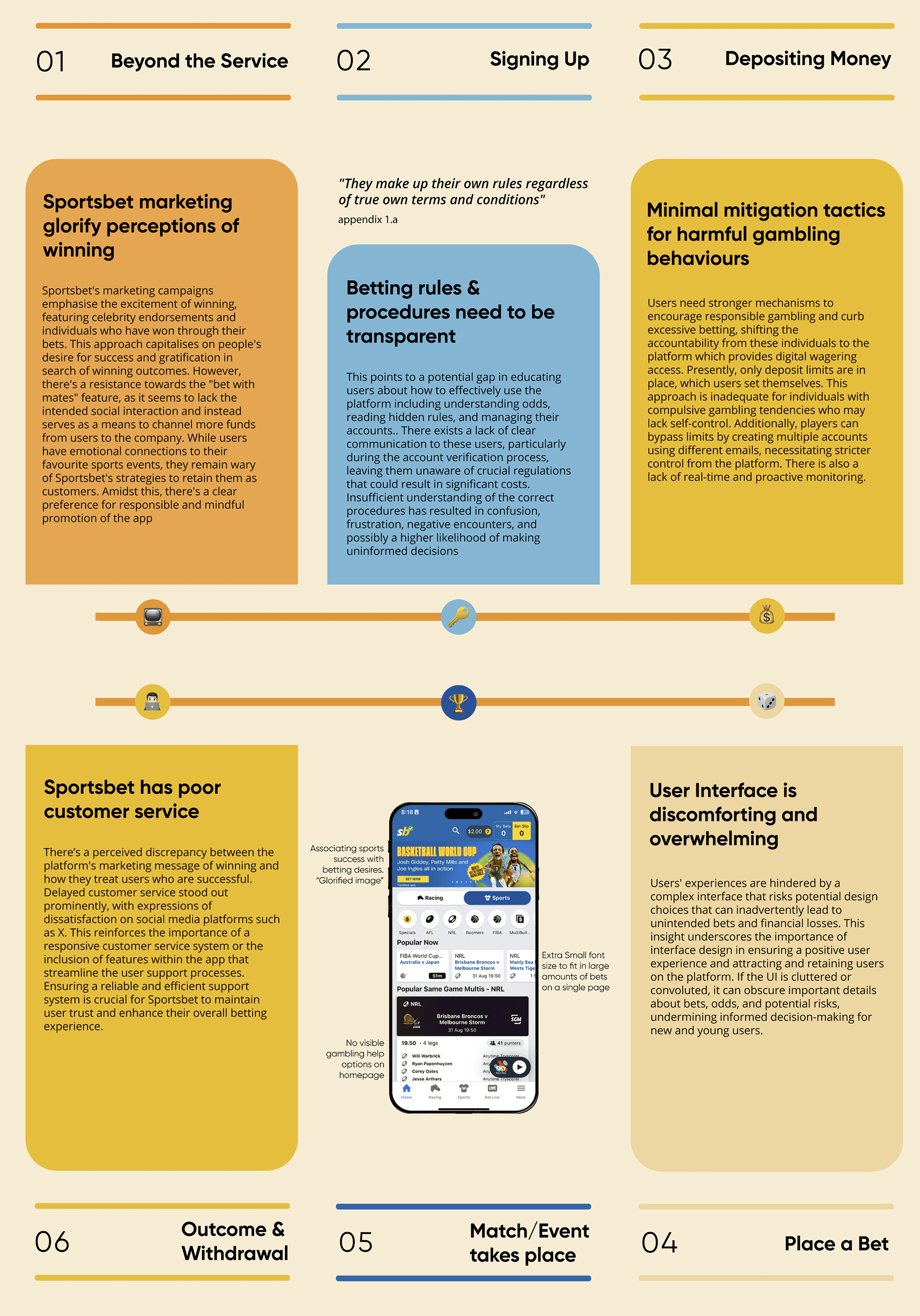
Using the above research methods to learn about gambling responsibly to populate the data in the above affinity diagram, I noticed a significant lack of transparency betting platforms dedicated to raising awareness for healthy gambling habits, which led me to 3 crucial insights:
To make these issues tangible, I mapped a current state customer journey of Sportsbet, the leading Australian bookmaker app. It revealed how touchpoints systematically pushed users toward higher engagement, while responsible controls sat several steps deep
Design problem statement
The art of ethical interfaces
Ideation
Hypotheses
UX Strategy
Harmful gambling behaviours are prevalent, beginning with overwhelming traditional and digital marketing
Harmful gambling behaviours are prevalent, beginning with overwhelming traditional and digital marketing
Harmful gambling behaviours are prevalent, beginning with overwhelming traditional and digital marketing
Harmful gambling behaviours are prevalent, beginning with overwhelming traditional and digital marketing
Concept Testing
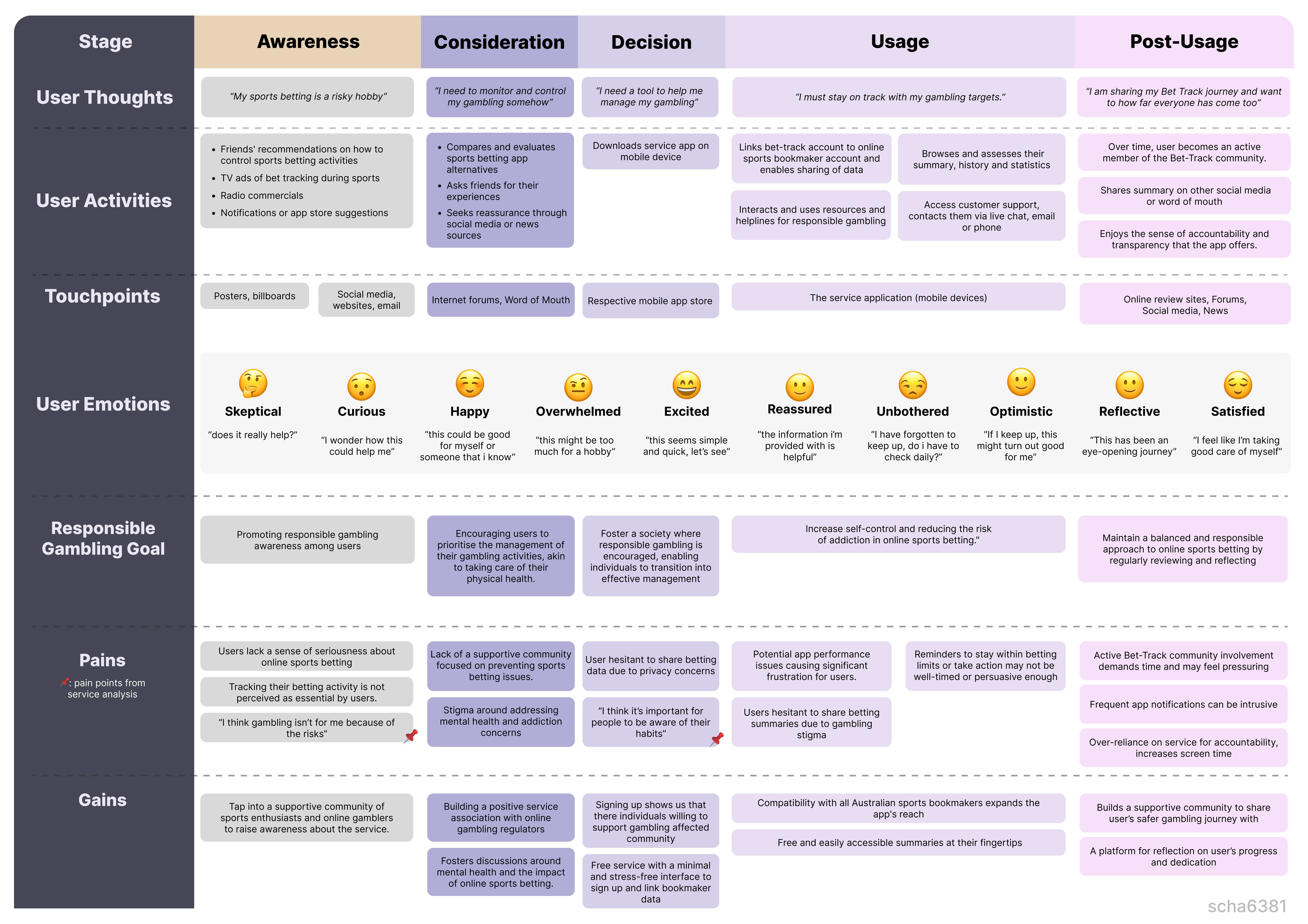
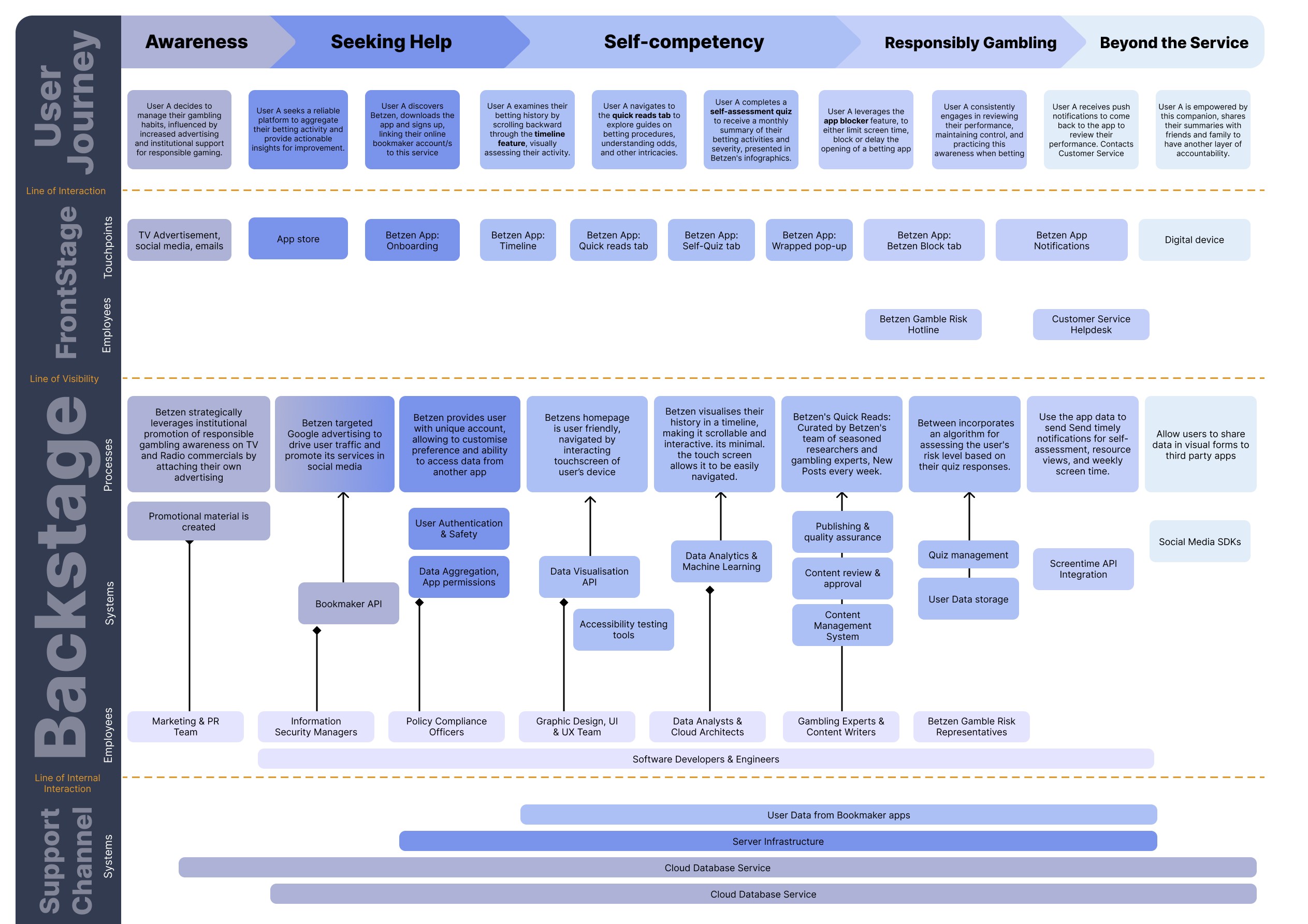
To visualise my service concept, I built a user journey map and a service blueprint
Usability testing
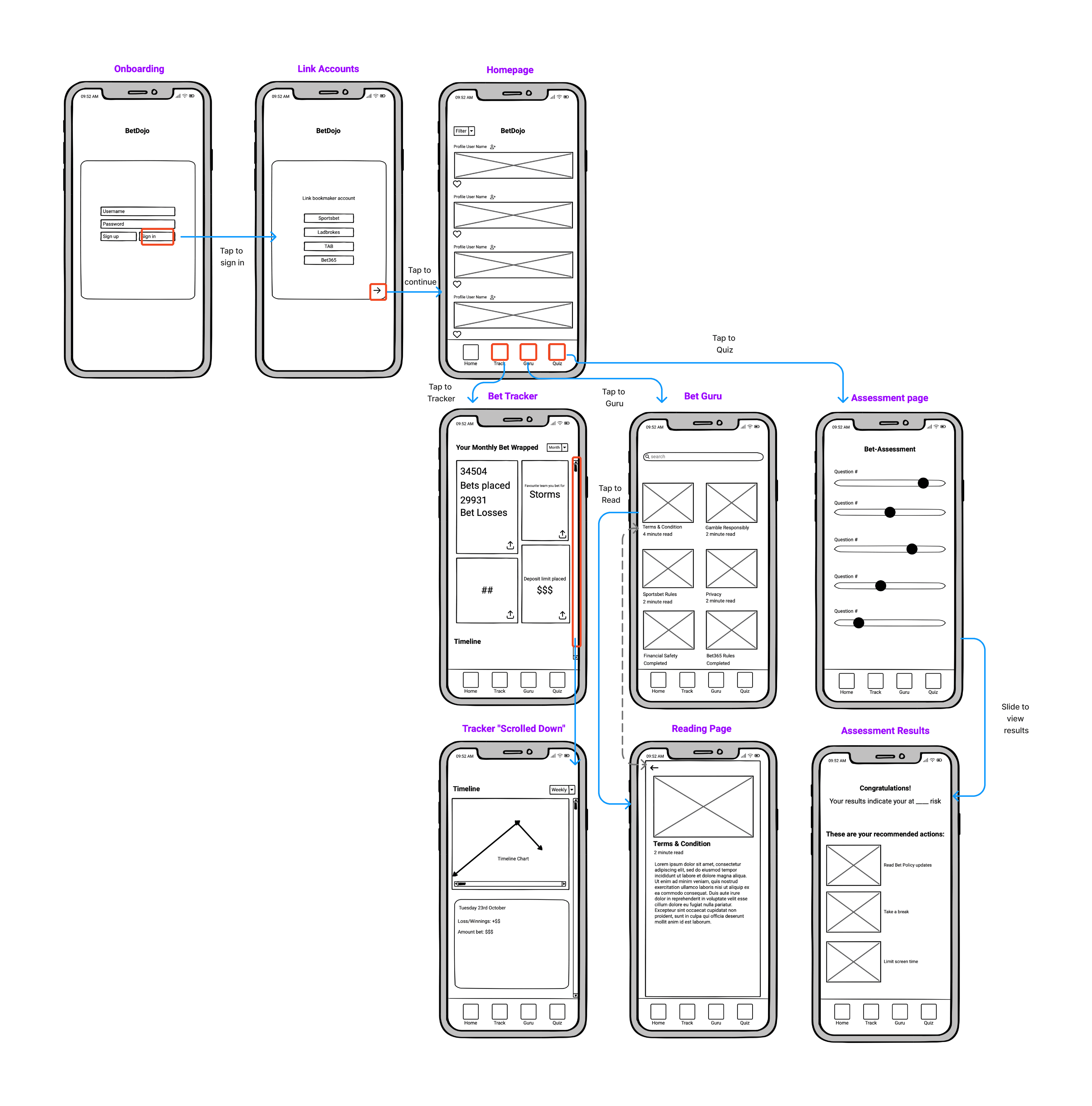
Wireframes
Iteration
Usability testing
My goal was to evaluate the BetDojo prototype by guiding users through tasks and measuring their experience against Jakob Nielsen’s usability heuristics. This helped us systematically uncover potential usability issues.
At the same time, we employed the think-aloud method, prompting users to vocalise their thoughts and actions as they navigated the interface. Together, these approaches allowed us to assess clarity of navigation and the accessibility of responsible gambling features. Our aim was to identify navigation challenges and validate the effectiveness of responsible gambling tools, ensuring the product delivered a user-friendly and ethically designed betting experience.
01 User control and freedom
The design decision was to include persistent back navigation and clearly discoverable exit states. Users can correct mistakes or return to the home screen via a consistent backlink icon positioned adjacent to headings. This predictable escape hatch reduces anxiety and reinforces spatial awareness within the product.
UX impact
Lower cognitive load
Reduced navigation errors
Increased perceived control
02 Recognition Over Recall
Material icons and labelled navigation. Navigation relies on recognisable icons supported by clear positioning. The home icon anchors the experience to a central hub, allowing users to orient themselves instantly without remembering paths.
UX impact
Faster navigation
Reduced memory burden
Improved orientation
03 Error Prevention & Feedback
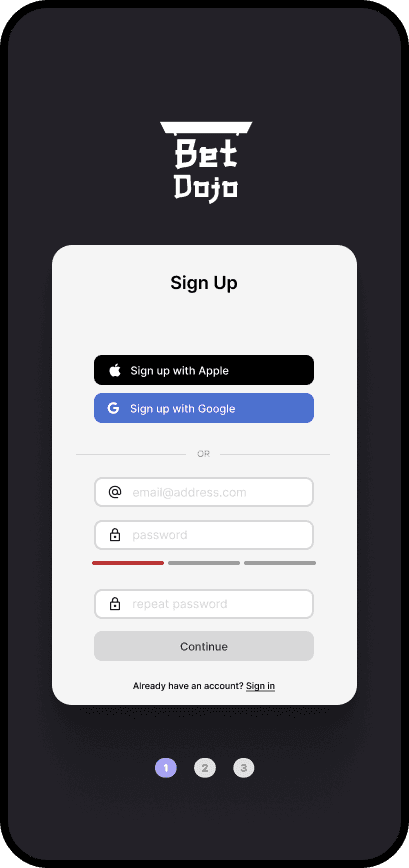
I added a dynamic password strength indicator because the platform handles sensitive personal data, password validation includes a live strength bar that shifts from red → orange → green. This communicates system expectations before submission, preventing avoidable errors.
UX impact
Fewer failed submissions
Clear security affordance
Immediate behavioural feedback
Outcome
A sportsbet management platform
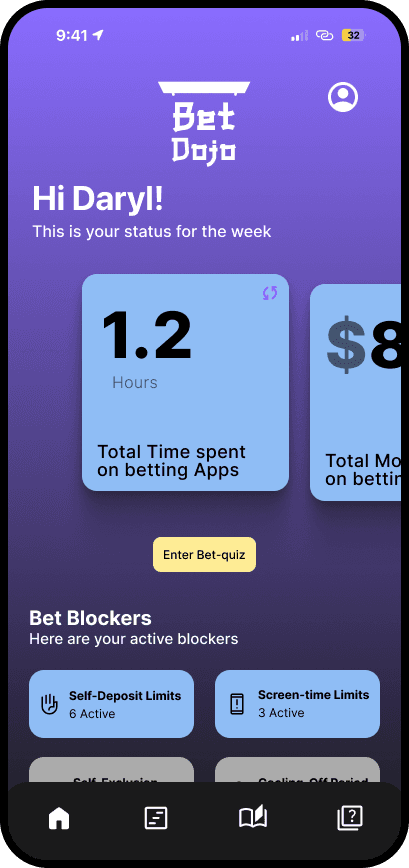
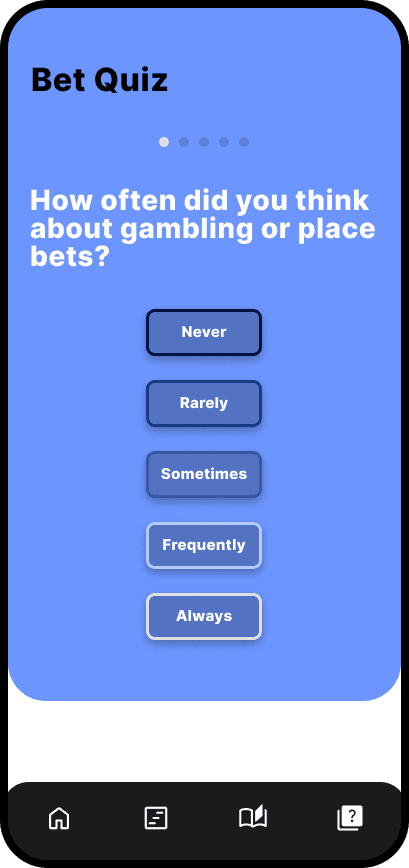
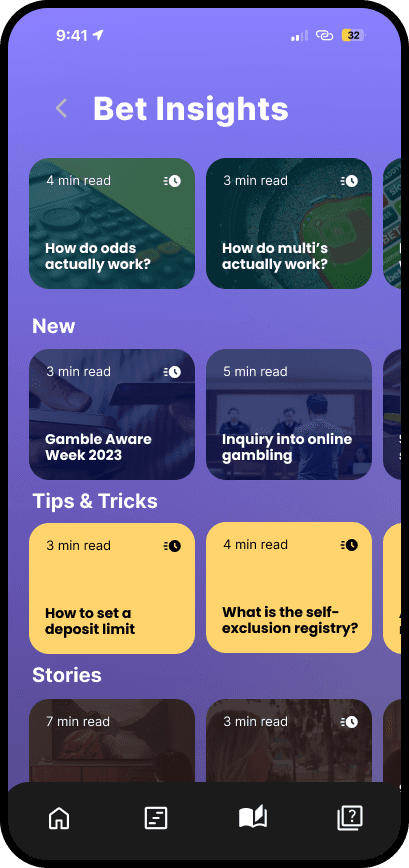
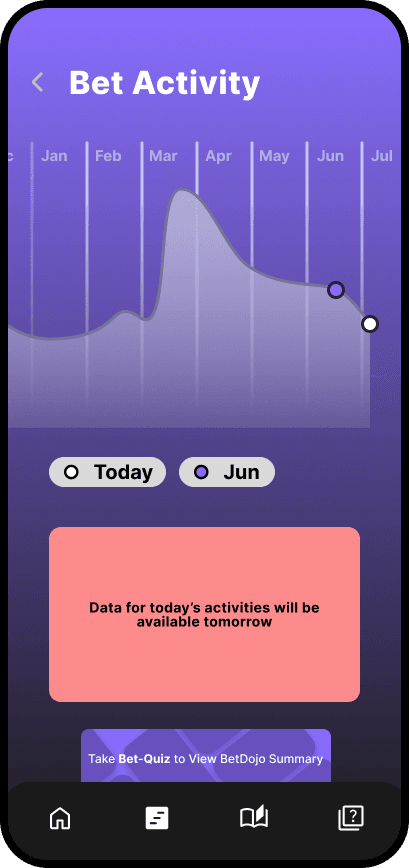
Betting activity
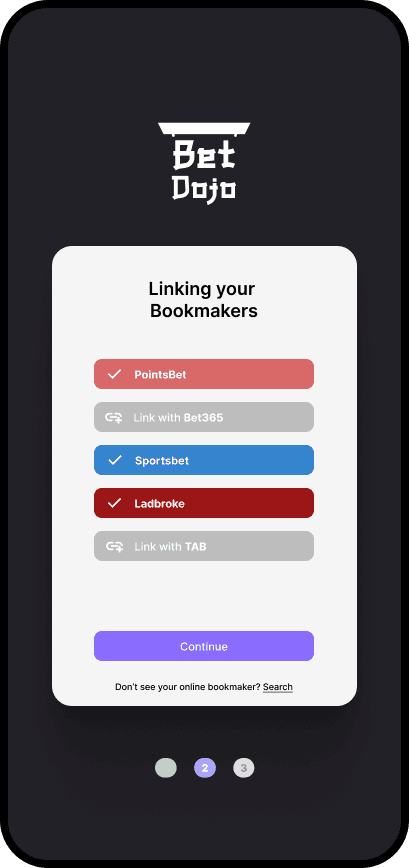
Gain insights into your gambling habits with personalised activity summaries of data from various bookmaker apps.
Learnings and Takeaway
What did I learn?